

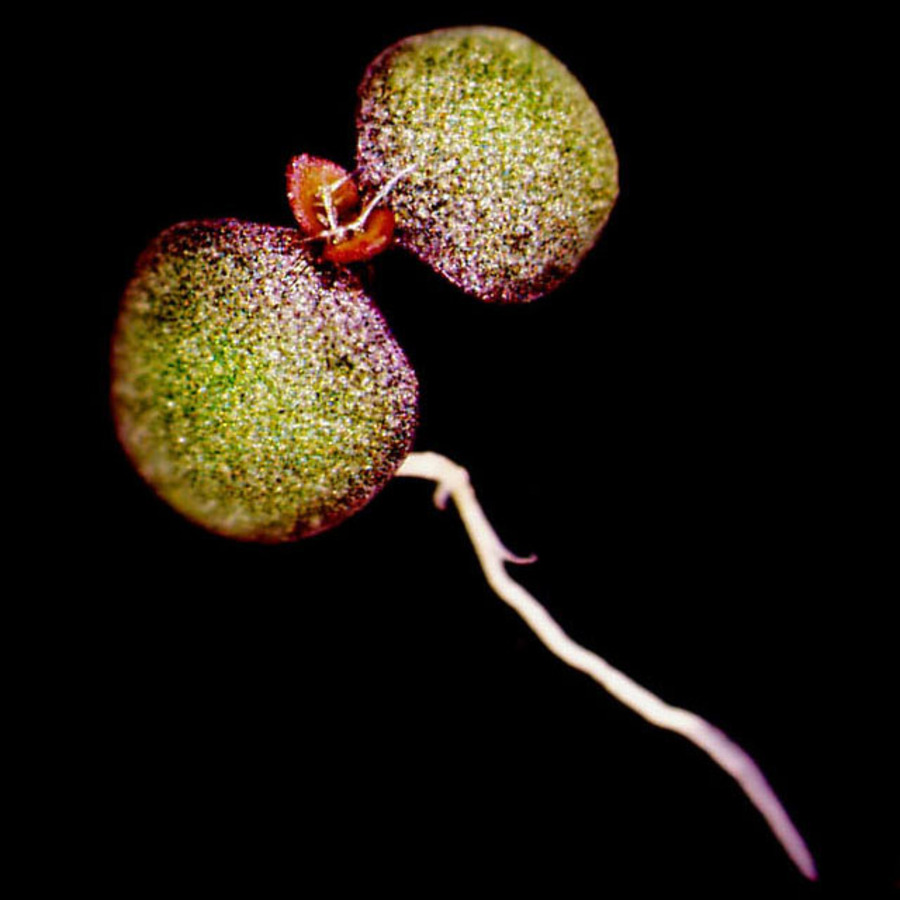
In saline soils, high levels of sodium and chloride ions can move into and accumulate in roots, reducing root growth by inhibiting cell division and elongation and impacting on crop yield. Soil salinity can also influence the uptake and retention of other ions important for growth. However, measuring and quantifying soluble ions in their native, cellular environment is inherently difficult.
To address this, a novel high-resolution technique was employed by PEB researchers to finely map soluble ions in plant root tissues. Laser ablation-inductively coupled plasma-mass spectrometry (LA-ICP-MS) had been widely used in mammalian systems, but its application in plants was previously limited. The high sensitivity LA-ICP-MS allowed differences in the accumulation of sodium and other important ions to be detected and, in a major finding of the study, it was that sodium does not accumulate in the root tips of barley, evidencing that sodium toxicity is not directly inhibiting root growth.
This study showed that LA-ICP-MS can be used for fine mapping of soluble ions in plant tissues and provides insight into the link between sodium toxicity and root growth responses to salt stress. Such technologies allowing in situ profiling of plant tissues will be fundamental for understanding abiotic stress responses and the development of salt tolerant crops.
Shelden MC, Gilbert SE, Tyerman SD (2019) A laser ablation technique maps differences in elemental composition in roots of two barley cultivars subjected to salinity stress. THE PLANT JOURNAL
vMohbG6ATtgQPv3jQ